Resource Topic: Project Design and M&E Planning

Refine Results

FIRST PUBLISHED
RESOURCE TYPE
TOPIC
TARGET AUDIENCE
PUBLISHED BY
POPULATION
LANGUAGE

PUBLISHED BY:

Logic models, including theories of change and logical frameworks (logframes) are valuable project design tools that can help you plan effective resettlement programming. This resource offers three templates you can use or adapt for creating your theory of change, and three for creating your logframe. Each includes examples to guide you in completing your logic […]

PUBLISHED BY:

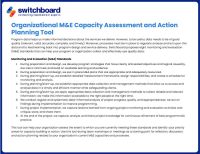
Program data can help us make informed decisions about the services we deliver. However, to be useful, data needs to be of good quality (relevant, valid, accurate, complete, and timely) and processes must be in place to regularly analyze and act upon this data and to feed learning back into program design and service delivery. […]

PUBLISHED BY:

A logic model is a graphic representation that defines all the building blocks required to bring about a given long-term goal. A theory of change (ToC) is a type of logic model that provides a visual representation of the change process, usually using arrows. Developing one can help your team: make sure that the logic […]

PUBLISHED BY:

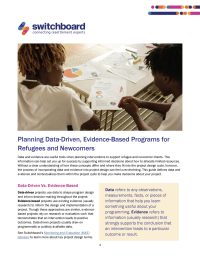
In designing programs to respond to the needs of refugees in the U.S, service providers have the opportunity to improve program processes and take steps towards becoming more data- driven and evidence-based. Data-driven programs are those where data shapes program design and informs decision making during the life of the program. Evidence-based programs are those […]

PUBLISHED BY:

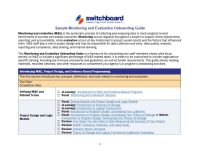
An indicator matrix (also referred to as a monitoring and evaluation framework) is ideally part of a monitoring and evaluation (M&E) plan, though it is often developed at the start of the grant or program. This tool outlines the data points you plan to use to measure the success of an intervention, known as indicators. […]

PUBLISHED BY:

Participatory methods expand the role and voice of clients in program design, implementation, and evaluation. When well-managed and resourced, they can empower refugee clients and improve services. Participation is a continuum: it can range from informing to consulting to full ownership. Approaches along the continuum vary by time and resource commitment as well as skills […]

PUBLISHED BY:

Collecting high-quality data is essential in refugee service work, whether for client needs assessments, program evaluations, or organizational learning. But sometimes even well-intentioned surveys can unintentionally create stress, reduce trust, or compromise the accuracy of the data collected. Switchboard’s Trauma-Informed Survey Toolkit (TIST) was developed to help service providers design surveys that are safe, respectful, […]

PUBLISHED BY:

Monitoring and evaluation (M&E) and data staff in resettlement organizations are responsible for ensuring that team members submit quality data on a timely basis. Your team members may struggle to prioritize data collection and entry while they work to help clients meet their needs. This tip sheet aims to help you create an organizational culture […]

PUBLISHED BY:

Meaningful informed consent entails more than a participant’s signature on a consent form. The steps that we take for obtaining consent are crucial to safeguarding participants’ dignity, autonomy, and wellbeing, especially when collecting data from vulnerable populations. This guide introduces the concepts of informed consent and informed assent and walks through five questions to ask […]

PUBLISHED BY:

This checklist accompanies this toolkit:  Trauma-Informed Survey Toolkit (TIST). Surveys are powerful tools for collecting data, shaping programs, informing policies, and improving services. But if designed or implemented without care, surveys can also replicate harm—particularly for individuals and communities who have experienced trauma. This toolkit provides practical guidance for practitioners and researchers who want to […]