Resource Type: Guide

Refine Results

FIRST PUBLISHED
RESOURCE TYPE
TOPIC
TARGET AUDIENCE
PUBLISHED BY
POPULATION
LANGUAGE

TOPIC:

SUBTOPIC:

PUBLISHED BY:

For newcomers to fully benefit from virtual and information services (VIS), they must be able to navigate technology with confidence. Many newcomers, however, face barriers that limit their ability to engage online, access information, and participate in virtual services. This guide presents five core challenges to digital access, along with steps you can take to…

PUBLISHED BY:

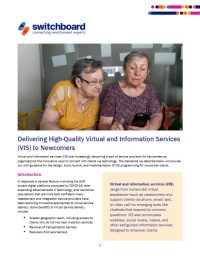
Virtual and information services (VIS) are increasingly becoming a part of service provision for newcomers as organizations find innovative ways to connect with clients via technology. The standards we describe below will provide you with guidance for the design, build, launch, and implementation of VIS programming for newcomer clients.

TOPIC:

SUBTOPIC:

PUBLISHED BY:

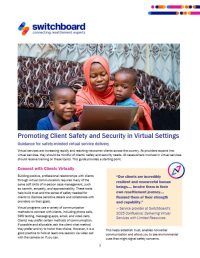
Guidance for safety-minded virtual service delivery Virtual services are increasing rapidly and reaching newcomer clients across the country. As providers expand into virtual services, they should be mindful of clients’ safety and security needs. All caseworkers involved in virtual services should receive training on these topics. This guide provides a starting point.

PUBLISHED BY:

Participatory methods expand the role and voice of clients in program design, implementation, and evaluation. When well-managed and resourced, they can empower refugee clients and improve services. Participation is a continuum: it can range from informing to consulting to full ownership. Approaches along the continuum vary by time and resource commitment as well as skills…

PUBLISHED BY:

Refugee Cash Assistance (RCA) Guide This guide outlines key RCA rules, distinguishing which aspects are fixed by federal regulation and which areas allow state-level flexibility. This information is intended as a comprehensive reference for understanding where states can shape their RCA programs and where they must comply with uniform federal requirements.

PUBLISHED BY:

Sometimes the information we want to learn about our resettlement programming is best captured by having conversations with our clients. Focus group discussions (FGDs) can be an efficient way of collecting this information since they allow you to talk to several clients at once. FGDs have the additional advantage of allowing you to observe group…

PUBLISHED BY:

Surveys are a powerful way to collect data about resettlement programming. They can help you measure outcomes of your work or gather feedback to help shape future projects. This guide provides tips and strategies to help you plan surveys that your clients understand, so the information you collect is more reliable. Guidance on practical considerations,…

PUBLISHED BY:

Meaningful informed consent entails more than a participant’s signature on a consent form. The steps that we take for obtaining consent are crucial to safeguarding participants’ dignity, autonomy, and wellbeing, especially when collecting data from vulnerable populations. This guide introduces the concepts of informed consent and informed assent and walks through five questions to ask…

Refugee and newcomer clients face a wide range of stressors that can contribute to crises before and during their resettlement, yet service providers are not always trained or licensed to respond to mental or physical health crises. This guide shares recommendations for non-clinical service providers to offer health crisis management to clients. Content warning: This…

PUBLISHED BY:

A Simple Guide for Home Maintenance Resettlement agency staff can use this guide as part of their housing orientation curriculum to educate newcomers about key home maintenance topics.