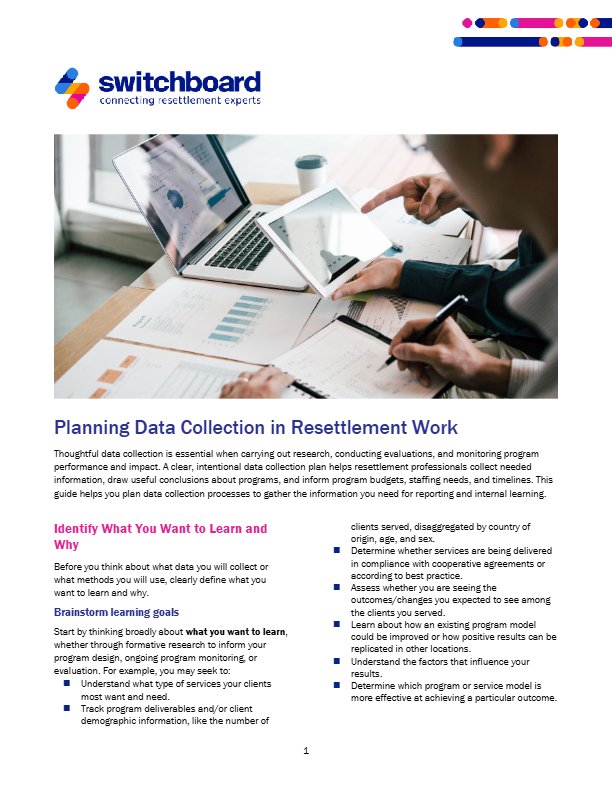
Thoughtful data collection is essential whether your goal is to carry out research, conduct evaluations, or monitor program performance and impact. A clear, intentional data collection plan helps us make sure we can collect the information we need, draw useful conclusions about our programs, and inform program budgets, staffing needs, and timelines. This document presents tips and examples to help you plan data collection processes that give you the information you need for reporting and internal learning.
Want to learn more?
- Take Switchboard’s self-paced e-learning module: Planning for Data Collection and Quality Assurance.
- To help you choose between common data collection methods such as pre-post-tests, focus groups, in-depth interviews, observation, and surveys, see Switchboard’s quick reference table: Overview of Common Data Collection Methods.
- To map out all the data points you need to collect, see: Data Collection Planning Worksheet.