
Connection with others and a sense of belonging is essential for student school engagement and success. Relationship building practices are therefore central within trauma-informed frameworks that aim to support students with a history of interpersonal trauma. The purpose of this systematic review was to evaluate the research literature regarding relationship building strategies that have been implemented within educational systems as part of their trauma-informed practices. The relationship building strategies, outcomes, and phenomenological experiences of teachers and students were evaluated. Four electronic databases were systematically searched and studies within the education system, from preschool to high school, which included connectedness to school through relationship building as part of a trauma-informed practice protocol, were included in the searches. Thirteen studies were identified where educational settings implemented relationship building strategies within well-established, eclectic, or relationship-specific trauma-informed models. Results suggest great variability of implementation and strategies related to relationship building across school settings, even within studies implementing the same trauma-informed framework. Across studies, positive outcomes reported included improved relationships with teachers, better relationships with other students, greater use of relationship building practices, an increased willingness of teachers to develop better relationships with their trauma-affected students, and improved relationships with families.
The study concludes that relationship building strategies within the school system need to be considered and implemented within a systems framework where teacher-child and teacher-family relationships are supported and encouraged. Further, these strategies are more likely to be sustainable when teachers receive ongoing support.
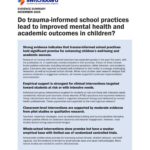
A Systematic Review on the Impact of Trauma-Informed Education Programs on Academic and Academic-Related Functioning for Students Who Have Experienced Childhood Adversity
The purpose of this study was to conduct a systematic review of the existing literature regarding trauma-informed education programs and their impact on academic and