
Behind the crowdsourcing platform: Assessing volunteer recruitment and engagement instruments

Year Published:

Abstract

Involving volunteers to perform tasks through crowdsourcing projects is gaining popularity. However, attracting volunteers and keeping them engaged throughout a project sets great challenges to project managers. This article analyzes the effectiveness of recruiting and engagement instruments on volunteers’ activity. A mixed-method approach has been used, including interviews with project managers and quantitative data from a large Dutch crowdsourcing platform. The research results show that crowdsourcing projects benefit from being part of a platform because of the higher activity of experienced participants. The study also provides empirical evidence supporting the effectiveness of timely communication and the speed of quality checks, both of which require project management resources. Finally, the study suggests that material rewards are less important for volunteer engagement than the intrinsic motivation of a point-based reward system.
Citation

Relevant Evidence Summaries

The evidence was reviewed and included in the following summaries: 

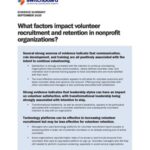
What factors impact volunteer recruitment and retention in nonprofit organizations?

This document summarizes the state of available evidence regarding what factors impact nonprofit organizations’ ability to recruit and retain volunteers. It aims to answer the following questions: What practices can managers implement to improve volunteer recruitment and retention in their organization? What are the gaps in the current research on volunteer recruitment and retention?  

About this study

DIRECTION OF EVIDENCE: Positive impact

FULL TEXT AVAILABILITY: Free

HOST COUNTRY: Netherlands

POPULATION: Other

STRENGTH OF EVIDENCE: Positive impact

TYPE OF STUDY: Suggestive evidence

YEAR PUBLISHED: 2024

More STUDIES

A Systematic Review on the Impact of Trauma-Informed Education Programs on Academic and Academic-Related Functioning for Students Who Have Experienced Childhood Adversity

The purpose of this study was to conduct a systematic review of the existing literature regarding trauma-informed education programs and their impact on academic and academic-related outcomes. The articles included for review (n=15) contained data on trauma-informed education programs implemented in preschool, primary/elementary, and high school settings. Academic and academic-related outcomes reported included attendance, disciplinary…

Buffering the effects of childhood trauma within the school setting: A systematic review of trauma-informed and trauma-responsive interventions among trauma-affected youth

Exposure to trauma during childhood is highly prevalent. This review seeks to evaluate the current state of the literature in regard to trauma-informed care within the school setting. A number of models have been put forth to describe broad trauma-informed approaches integrated within school systems, which incorporate trauma sensitive care and practices within the broader…

A Scoping Review of School-Based Efforts to Support Students Who Have Experienced Trauma

The current review sought to describe the published literature relative to addressing trauma in schools. Through a systematic review of peer-reviewed publications as well as gray literature, we identified a total of 91 publications that were coded for study rigor as well as a number of intervention characteristics. Publications included in the review mentioned a…