
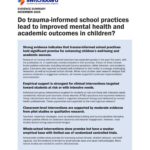
Interest in trauma-informed approaches in schools is high throughout the US, UK, Australia, Canada
and other countries, but the empirical evidence on whole-school responses to trauma is limited. This
conceptual and theoretical review explores relevant literature; outlines existing conceptual models for
trauma-informed organisations, including schools; reviews current evidence for individual components
of conceptual models relevant to schools; and considers implications for future research, practice and policy. Four common components were identified in the literature: (a) understanding trauma and making a universal commitment to address it; (b)
emphasising physical, emotional and psychological safety for all school members; (c) taking a strengths-based,
whole-person approach toward staff, students and families; and (d) creating and sustaining trusting,
collaborative and empowering relationships among all school constituents. Most of these components
have been studied as part of other literature and are not specific to trauma-informed schools. Practitioners
would benefit from shifting to an organisational model for trauma rather than the historical emphasis on
interpersonal approaches, toward ensuring that all staff members are trauma-aware and -responsive,
and emphasising the creation of healthy, healing schools for all communities.
A Systematic Review on the Impact of Trauma-Informed Education Programs on Academic and Academic-Related Functioning for Students Who Have Experienced Childhood Adversity
The purpose of this study was to conduct a systematic review of the existing literature regarding trauma-informed education programs and their impact on academic and