Refugees and other newcomers may be less likely to access preventative health care, which includes eye care. As a service provider, you play a key role in educating newcomers about the importance of eye care and assisting them in scheduling appointments. This blog post reviews why eye care matters for newcomers, key information about vision screenings and eye exams, and how you can support your clients in navigating their eye health.
What is eye care, and why is it important?
Eye care is the maintenance, protection, and treatment of the eyes. It includes maintaining healthy habits, attending regular check-ups, and receiving additional care when necessary.
The eyes provide insight into a person’s overall health. Certain eye issues can be an early sign of a more serious illness. Alternatively, they can indicate an existing illness has progressed or worsened. Early intervention on serious health issues may prevent or mitigate significant outcomes such as vision impairment or blindness.
Impaired vision can decrease a person’s quality of life. For example, it can affect performance at work or school, reading and writing, and the ability to safely navigate their surroundings (e.g., walking or driving). Vision is screened during the driver’s license exam, and uncorrected poor vision can negatively impact a person’s ability to get a driver’s license. Vision loss has also been linked to mental health outcomes, including loneliness, social isolation, and anxiety.
Refugees and other newcomers may have competing priorities that make eye care less of a focus. They also may not be aware of the importance of eye care or what benefits their insurance provides. Use a strengths-based, non-judgmental approach when speaking with clients about eye care in the U.S. You can help normalize eye care (e.g., having regular exams, wearing glasses if needed) as being a routine, important part of care in the U.S., similar to dental care and physical checkups.
What are vision screenings and eye exams, and which providers perform them?
Eye or vision screenings are a basic test performed by a primary care provider to determine whether a person needs to be referred for further evaluation. Vision screenings include reading a chart with large letters or symbols at the top that progressively decrease in size. While screenings can help identify if a person needs further evaluation, they do not diagnose eye diseases or provide a comprehensive assessment of eye health.
- Pediatricians (for children) and primary care providers (for children or adults) can perform a basic vision screening during an annual checkup and determine whether a referral to an eye specialist is needed.
- The Domestic Medical Screening also includes a formal vision screening as part of the history and physical component of the exam for all patients three years old and up.
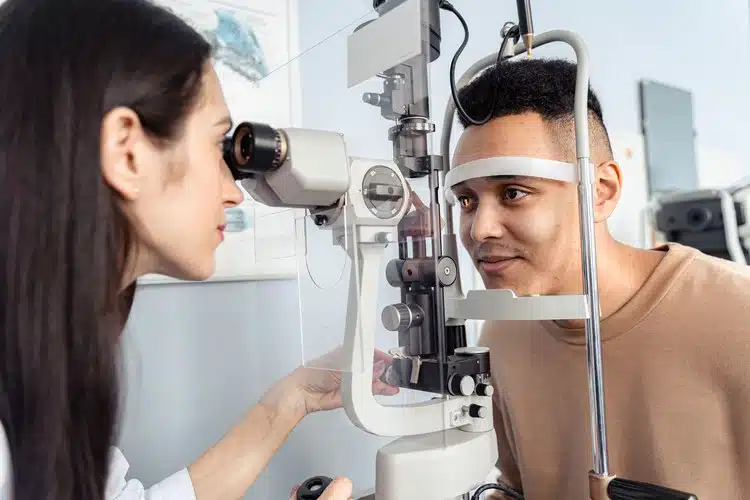
Eye exams, performed by an eye specialist, evaluate a person’s eye health and ability to see using a variety of instruments and tests. A comprehensive eye exam for an adult often involves receiving eye drops to dilate (widen) the pupils to allow for testing.
- Optometrists have completed optometry school and can perform eye exams to diagnose and treat eye problems. They cannot perform surgery.
- Ophthalmologists are doctors who have completed medical school and then specialized in eye health. They diagnose and treat eye problems through eye exams and can also perform eye surgeries.
How can service providers support eye care for newcomers?
Except in rare cases, refugee service providers are not trained medical or mental health professionals, so you should not provide health advice or try to diagnose your clients. Instead, take these steps to support your newcomer clients in their eye care:
- Be generally aware of common eye issues.
- Provide basic education on eye care.
- Connect newcomers with appropriate health professionals
- Understand insurance coverage and low-cost options
- Prepare newcomers for what to expect at eye exams
1. Common Eye Issues
Newcomers may experience common eye issues such as blurred vision caused by refractive errors (e.g., nearsightedness, farsightedness, astigmatism), cataracts, glaucoma, and diabetic retinopathy. Most of these conditions are treatable or manageable with proper care. But it’s important to note that many of these eye issues have no early symptoms. People may not realize they have a condition until it has progressed significantly and the damage is irreversible. This is why regular vision screenings and eye exams are critical to any person’s health.
2. Education on Eye Care
Share ways newcomers can maintain healthy eyes, such as receiving regular eye exams and knowing their family history of eye health. Additionally, convey that preventing or treating conditions like diabetes and hypertension (high blood pressure) can be valuable for eye health. Other tips to share with newcomers include encouraging specific lifestyle choices, such as:
- Being physically active
- Eating plenty of fruits, vegetables (especially leafy greens), and fish
- Wearing sunglasses even when it is cloudy outside
- Not smoking or quitting smoking
- Wearing protective eye gear (e.g., in work settings where damage to the eyes is possible)
- Taking regular breaks from staring at screens
3. Connecting Newcomers to Appropriate Care
Explain eye care to clients in simple terms, and assist them in seeking care from their primary care provider. As noted previously, the primary care provider is best equipped to evaluate if a person needs specialized eye care.
You can also help by reducing clients’ barriers to eye care access (e.g., transportation) and connecting them with appropriate health professionals (for example, by maintaining a list of community health clinics and eye clinics).
4. Insurance Coverage and Low-Cost Options
Eye exams, glasses, and contact lenses are often viewed as supplemental by insurance companies, meaning they are often not covered by primary insurance. If this is the case for your client, explain that they would need to purchase additional (supplemental) coverage if they want their insurance to cover eye care.
For newcomers with Medicaid or Refugee Medical Assistance, eye care benefits vary by state and age (children often have more eye care coverage than adults). You can assist clients in calling their insurance to understand what benefits are available.
For those who are uninsured or whose insurance does not cover eye care, the National Eye Institute maintains a list of free and low-cost options you can consider with your clients. Other ways clients can reduce costs include taking eyeglass prescriptions and ordering glasses from a reputable online shop rather than buying them at the eye doctor’s clinic.
Some clients may only need reading glasses, which are often inexpensive and available to purchase without a prescription at grocery stores and pharmacies. Community health centers and local colleges or universities with optometry or ophthalmology programs may also offer low-cost eye clinics.
5. Preparing Newcomers for an Eye Exam
If your client has scheduled an eye exam, help prepare them for what to expect. Let them know that the provider may dilate their pupils with special eye drops and use medical instruments such as the following:
- Machines that test how well you see and whether your eyes move correctly
- A special light and magnifier to check your eyes for damage or early signs of disease, and to see if your eyes react appropriately to light
- Machines that check your eye fluid pressure
The medical provider will give instructions and ask many questions during the eye exam, so it’s essential for clients to have a trained medical interpreter available if English is not their preferred language. Help clients request an interpreter through their insurance company (if available) or try to find an eye specialist who is fluent in the client’s preferred language.
Resources
- Switchboard Archived Webinar: Assisting Newcomers with Navigating the U.S. Health Care System – An Introduction for Direct Service Providers
- Switchboard Blog: Navigating Healthcare Bills with Newcomer Clients
- Settle In: Healthcare in the U.S.
- National Eye Institute: Healthy Vision Tips Videos (English and Spanish available)
- Minnesota Center of Excellence in Newcomer Health: Vision Health Videos (English and 10+ languages available)
The IRC received competitive funding through the U.S. Department of Health and Human Services, Administration for Children and Families, Grant #90RB0053. The project is 100% financed by federal funds. The contents of this document are solely the responsibility of the authors and do not necessarily represent the official views of the U.S. Department of Health and Human Services, Administration for Children and Families.