
Helping newcomer clients navigate health care, including health care bills, is an essential and challenging task for many caseworkers. This blog post covers two ways you can help your clients with health care bills: preventing unnecessary bills from being sent and guiding them through the steps to take after a bill comes.
Key Points
Make sure your clients know that in the U.S., no one can be denied health services regardless of their ability to pay, but they can expect to receive a bill after nearly any health care visit, especially without insurance. The single most important message is never ignore a bill, as unpaid bills can seriously affect credit and finances.
Tips to Minimize Health Care Bills
- Know the Health Insurance Provider and Benefits
It’s important that clients know who their health insurance provider is, whether their coverage is currently active, and what that coverage includes. A client’s level of coverage determines how much they’ll owe out of pocket. Coverage varies significantly depending on the type of insurance and the service received. Types of health insurance available to newcomers include:
- Medicaid: for people who meet certain income and other eligibility requirements; available to some refugee and other newcomer families
- Refugee Medical Assistance (RMA): available the first months after arrival for newcomers not eligible for Medicaid who meet certain income and eligibility requirements
- Children’s Health Insurance Program (CHIP): for children and those who are pregnant whose families meet certain income and other eligibility requirements
- Employer-sponsored insurance (also known as private health insurance): offered by some employers to their employees and employees’ dependents. The insurance coverage varies between employers.
- Marketplace plans: administered by the U.S. government; helps people find and enroll in health insurance; offers financial incentives to those who qualify
Insurance coverage varies by state, and with further Medicaid changes anticipated, you should help clients understand how any shifts in policy may affect their benefits. Groups such as the Minnesota Center of Excellence in Newcomer Health, Society of Refugee Healthcare Providers, and Association of Refugee Health Coordinators are closely watching for these changes and will communicate what is known about the impact on newcomers’ benefits as news becomes available.
To help clients avoid lapses in coverage, support them in planning ahead for their health insurance renewal. Together, note expiration dates, work backwards to set an application deadline, and learn where to apply and what documents to gather.
Additionally, assist clients in confirming that all family members’ names, dates of birth, sex, and mailing addresses are accurate on both their insurance paperwork and with their health care providers. Errors in the system, such as a misspelled name or an outdated address, can result in incorrect bills or bills that are missed entirely.
- Provide Insurance Information for Every Health Care Visit
Coach clients on always:
- Confirming with their health care provider that they accept the client’s health insurance before every appointment. This is important even if the client has seen that provider for services in the past, as providers and insurances can change.
- Bringing their insurance card to every health care appointment.
- Asking about co-payments and cost estimates for appointments, procedures, treatment, and prescriptions.
Steps to Take After Receiving Health Care Bills
Patients in the U.S. typically receive several letters following medical visits, including:
- A statement from their health insurance explaining what was and was not covered. Health plans call this statement an “Explanation of Benefits“.
- A bill from the hospital or health care provider(s)
- A bill from a lab or imaging center
Explain to clients that one bill may not reflect the full cost for complicated health services, such as an emergency room visit, surgery/procedure, or hospital stay.
- Confirm Information Is Correct
When a bill arrives, clients should first verify that all information is correct: names, dates of birth, services provided, and dates of service. Bills can contain duplicate charges, services not received, or misspellings that prevent insurance from matching the claim. Any errors should be corrected by calling the phone number on the bill. Interpreter access will vary depending on the provider.
- Confirm What Health Insurance Will Cover
If a client with insurance receives a bill requiring full or partial payment, they should call their insurance company before paying. The provider may not yet have received the insurance payment, or the charge may ultimately be covered. You can help clients:
- Locate their insurance company’s phone number
- Practice navigating the phone menu to reach a representative (clients with RMA or Medicaid can request an interpreter)
- Describe the services received and the amount billed when speaking with a representative
- Confirm with the representative whether the charge is accurate
If the bill is not correct, clients should ask the insurance company to help them communicate with the health care provider’s billing office to correct the bill.
If the bill is correct, clients will have to pay the amount owed. They can follow the next steps if the amount is too much for them to pay.
- Apply for Financial Assistance
Many hospitals and health care networks offer financial assistance programs that can reduce or eliminate a bill entirely—and many newcomers may qualify.
- Help clients contact the hospital’s billing department to ask about financial assistance, eligibility requirements, and the application process
- Guide clients in gathering the documents typically required: proof of income, family size, and residence
- Advocate on clients’ behalf by providing context about newcomers’ situations
If the full amount isn’t eligible for assistance, help clients ask about payment plans, which allow them to pay an agreed monthly amount over time. This keeps the bill out of collections while staying within their budget. Ethnic community-based organizations (ECBOs) and local charities may also be able to assist with medical bills. You and your agency can conduct a mapping exercise and maintain a list of local groups who are able to assist clients with various resources.
Learn More
The resources below offer tools, guides, and frameworks to help you coach clients on navigating the U.S. health care system.
Settle In:
- Healthcare in the U.S.
- Your Rights and Responsibilities in the U.S. Healthcare System
- Navigating Healthcare Part 1: Healthcare Providers and Services
- Navigating Healthcare Part 2: Emergency Care and 911
Switchboard:
- Going to the Pharmacy Virtual Reality 360 Video
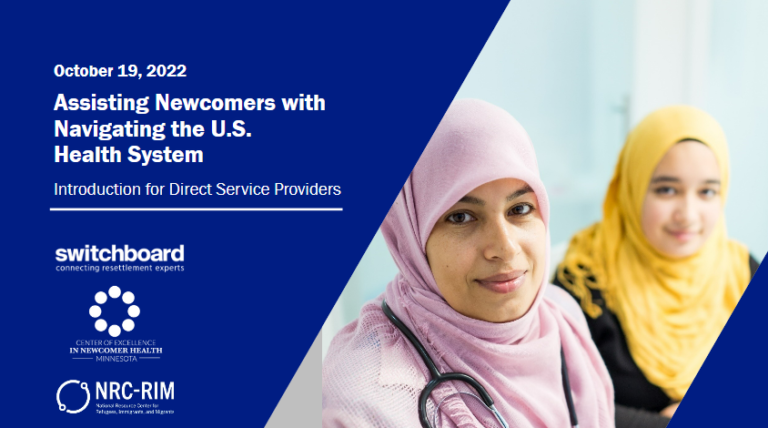
- Assisting Newcomers with Navigating the U.S. Health System
Migration Health Initiative: Healthcare Navigation
Society of Refugee Healthcare Providers: Directory of Refugee Healthcare Providers
Minnesota Center of Excellence in Newcomer Health: Newcomer Education for Wellness Video Series
The IRC received competitive funding through the U.S. Department of Health and Human Services, Administration for Children and Families, Grant #90RB0053. The project is 100% financed by federal funds. The contents of this document are solely the responsibility of the authors and do not necessarily represent the official views of the U.S. Department of Health and Human Services, Administration for Children and Families.