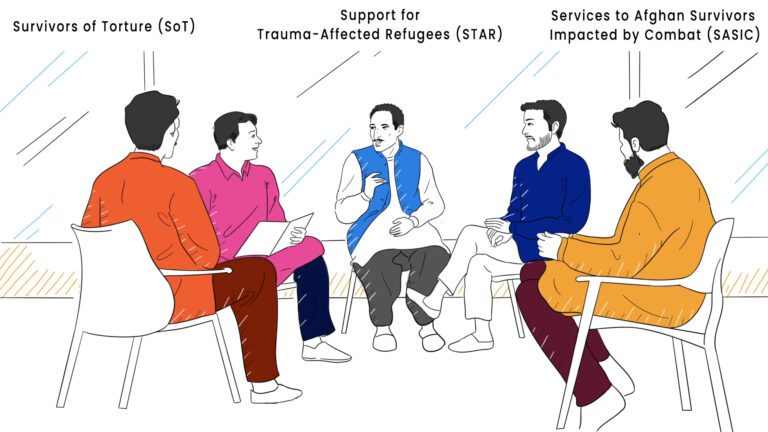
As the refugee resettlement sector has experienced a decline in arrivals, and enrollments into Office of Refugee Resettlement (ORR) programs have reduced, service providers are thinking creatively about outreach. Engaging “overlooked” ORR-eligible populations can help providers meet program goals even when arrival numbers are low. This blog post will help you identify potentially eligible clients through outreach and collaboration with community partners, ultimately resulting in more clients enrolled and served.
Two Key Questions
There are still hundreds of thousands of newcomers in the U.S. who qualify for ORR services. Approximately 714,000 ORR-eligible individuals were admitted to the United States during federal fiscal year 2024 alone (October 1, 2023 – September 30, 2024). The key challenge is figuring out how to reach them.
Two questions should guide your thought process:
- Which ORR-eligible client populations are not yet engaged with my agency?
- Which organizations in my area typically connect with those populations?
Combining these two factors will create a clear roadmap for outreach.
Understanding ORR Eligibility
The first step to engaging with “overlooked” populations is to familiarize yourself with Office of Refugee Resettlement (ORR) eligibility. Those eligible for ORR programs include refugees, asylees, Cuban and Haitian Entrants (CHEs), Amerasians, Afghan and Iraqi Special Immigrant Visa (SIV) holders, Victims of Human Trafficking, and certain Afghan and Ukrainian Humanitarian Parolees.
Unsure where to start? Check out the following Switchboard resources on ORR eligibility:
- Resource Collection: Getting Started in Navigating ORR Eligibility.
- Understanding Immigration Context and Eligibility for Cuban and Haitian Entrants
- Public Benefits Overview for Refugees and Other Humanitarian Immigrants
Your program data can provide a clear picture of which ORR-eligible clients you are currently reaching and not reaching. Review your data to see how well you are currently reaching populations that can be more difficult to identify, such as:
- Asylees,
- SIV holders,
- Secondary migrants (those who resettled in one city or state and have since moved to another), and
- Refugees and other newcomers who arrived in FY25, FY24, or earlier.
Identifying Potential Partners
Once you have a sense of which eligible populations to focus on, think through which community partners may already interact with those newcomers in your area. Here are a few examples:
- Legal clinics often know individuals recently granted asylum. Coordinating with them can help connect those clients to ORR services. Legal service providers who assist with adjustment of status are also well-connected with newcomers who arrived less recently.
- Afghan community groups, mosques, and coalitions (such as #AfghanEvac) can help reach SIV holders who often arrive independently without a resettlement agency referral.
- Ethnic community-based organizations (ECBOs) and faith communities are key for identifying secondary migrants, who often seek support from these partners when moving into a new area.
- Local refugee leaders, former clients, and education programs (such as ESL centers), are reliable connectors for newcomers who arrived less recently but remain within the five-year ORR eligibility window.
Keep in mind that client confidentiality is essential, so any potential partners will need to obtain documented client permission prior to making a referral and must treat all personally identifiable information appropriately.
Developing Your Outreach Plan
Once you have identified populations in your area, as well as potential partners who are engaged with them, you can create an outreach plan. Approach these conversations as mutually beneficial opportunities to strengthen the overall local support system. Organizations are often grateful for opportunities to connect with others, especially when they face capacity constraints.
Here are some considerations to keep in mind:
- Prioritize safety and confidentiality to address the concerns many newcomers have in light of shifting policies.
- Work in partnership with newcomer leaders from the communities you serve. Include youth and young adults in your strategy and empower them as community leaders.
- Communicate the specific services your agency or program can offer to ORR-eligible populations. Be prepared to answer questions from external partners and explain how your agency can help fill gaps in support for newcomers.
- Outline the questions that you will want to ask potential partners.
- Consider media-based outreach by engaging radio stations, social media groups, and local listserv moderators.
For more guidance on establishing and sustaining local partnerships, see Switchboard’s guide to Building Community Partnerships Across the Resettlement Landscape.
To be successful, partnerships must be mutually beneficial. Below are some examples of activities that can offer value to your organization as well as your partners:
- Co-hosting events and coordinating activities to establish shared goals and visibility
- Creating regular lines of communication so information flows reliably and referrals move smoothly
- Convening program leads from partner organizations to discuss strategies, barriers, and best practices
- Exploring collaborative case management for families who rely on more than one agency
- Sharing funding leads that fall outside your organization’s mission or capacity
Use a “Whole Office” Approach
Community engagement works best when it’s a shared responsibility across your entire organization and not the job of only one team. Caseworkers often have the closest contact with clients and hear directly about which community partners are trusted, which gaps families encounter, and which informal networks newcomers rely on. However, front-desk staff, employment specialists, youth coordinators, and program managers all interact with different parts of the community. Each can reveal new partners, share information about services, and identify unmet needs.
Conclusion
Identifying and engaging with “overlooked” clients can feel overwhelming, especially during periods of rapid change. Keep in mind two guiding questions: which populations are not yet engaged with your agency, and which partners in your area can help reach them? These questions can help you identify client communities, build partnerships with organizations already serving them, and expand enrollment, resulting in more newcomers receiving the assistance they need.
A service provider contacted the Switchboard Community Support Line (SCSL) on behalf of a family whose previous program had closed, leaving them without critical support. SCSL coordinated with leaders at another agency, which resulted in the family promptly enrolling in that agency’s Refugee Support Services (RSS) program. This scenario shows how timely communication across providers can prevent service gaps and ensure eligible clients remain connected to the support they need.
If you are a community member or service provider assisting newcomers, our team is available to help you connect clients to available resources. Call (212) 551-3100 or email SCSL@rescue.org!
Additional Resources
- Guide: Identifying Strategic Local Partnerships: Guidance for ECBOs
- Blog: Mapping Connections: Building Effective Resource Directories for Newcomer Communities
- Video: Major Service Areas and Grant Programs of ORR’s Resettlement Program
- Video: An Overview of the Office of Refugee Resettlement
- Blog: Challenging Community Conversations: Three Tips to Build Understanding and Support
The IRC received competitive funding through the U.S. Department of Health and Human Services, Administration for Children and Families, Grant #90RB0053. The project is 100% financed by federal funds. The contents of this document are solely the responsibility of the authors and do not necessarily represent the official views of the U.S. Department of Health and Human Services, Administration for Children and Families.